Blog
IoT in HVAC Systems
Posted: 15.09.2026
IoT in HVAC is not simply a mobile app for changing a thermostat. In a commercial building, it is the connected layer that brings together field sensors, controllers, meters, drives and software so that operations teams can see conditions, respond to alarms and improve control over time.
For facilities in Qatar, where cooling systems often run for long hours, clear visibility of temperatures, schedules, valve positions, fan status and energy use can help teams identify avoidable operation. The value comes from applying the data to a defined operating strategy—not from connectivity alone.
What Does IoT Mean in HVAC?
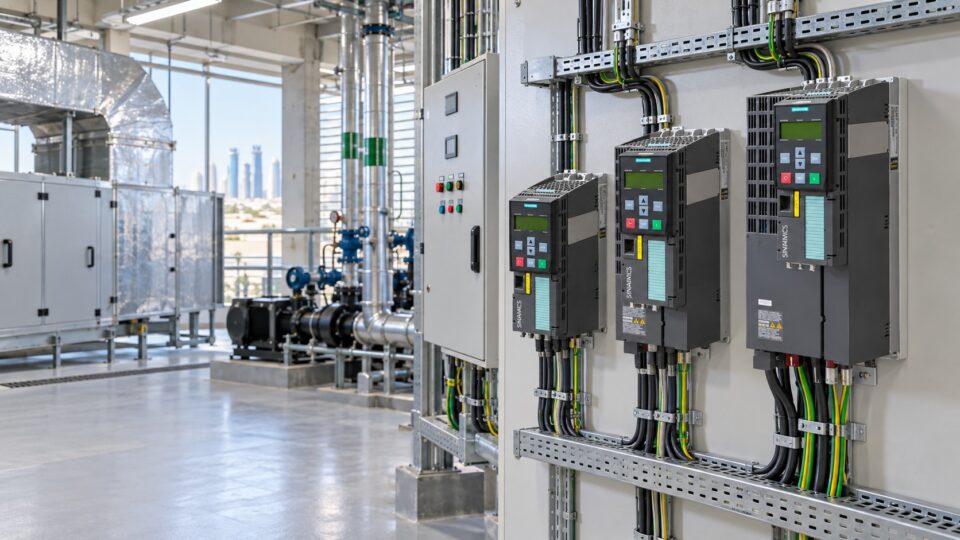
The Internet of Things (IoT) describes physical devices that collect, exchange or act on data through a network. In HVAC, that may include room thermostats, temperature and humidity sensors, CO₂ sensors, energy meters, variable-frequency drives (VFDs), actuators and controllers. A building management system (BMS) or cloud-connected platform can present that information through dashboards, trends, alarms and control sequences.
IoT-enabled equipment can complement a conventional BMS. The goal is not necessarily to move every control point to the cloud; it is to make the right information available to the right people while maintaining reliable local control, cybersecurity and clear operator responsibility.
How Connected HVAC Systems Work
- Sense: field devices measure variables such as temperature, humidity, pressure, flow, occupancy or equipment status.
- Control: local controllers apply approved sequences—for example, modulating a valve, staging equipment or resetting a fan speed.
- Communicate: selected points are shared through the building network using an appropriate, documented integration approach.
- Visualise and act: operators review trends, alarms and energy data, then investigate faults or adjust authorised schedules and setpoints.
This structure supports better decisions without removing the need for correct mechanical design. Sensor location, calibrated instruments, safe operating limits and clear sequences of operation remain fundamental.
Practical IoT and BMS Use Cases
1. Remote condition monitoring
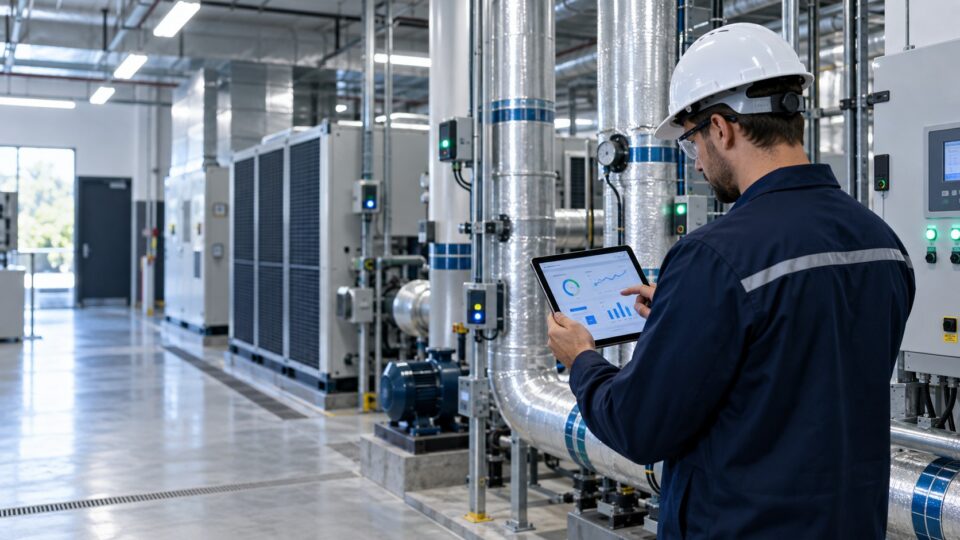
Dashboards can bring AHU, FCU, pump and plant information into one view. Operators can compare supply-air temperature, valve command, fan proof and room conditions before attending site, helping them prioritise the right issue.
2. Alarm management and fault investigation
Meaningful alarms are more useful than a long list of notifications. A well-configured system should identify abnormal conditions, record their timing and help an operator distinguish a genuine equipment problem from a temporary operating state. Alarm priorities and escalation paths should be agreed during commissioning.
3. Schedule and setpoint discipline
Many savings opportunities begin with basic control discipline: matching run times to occupancy, avoiding simultaneous heating and cooling, and reviewing setpoints against actual requirements. Connected trends make those conversations evidence-based.
4. Demand-responsive ventilation and comfort
Where the HVAC design and applicable requirements allow it, occupancy or air-quality signals can help a system adjust ventilation and airflow to changing use. The strategy must be engineered carefully so indoor-air-quality and minimum ventilation requirements are maintained.
A Practical Implementation Checklist
- Start with a measurable objective: reduce comfort complaints, improve plant visibility, verify schedules or monitor energy.
- Develop a point list and confirm each sensor, actuator, meter and communication interface.
- Document the sequence of operation, setpoint ownership and alarm priorities before programming.
- Use interoperable, supportable equipment and involve IT stakeholders early where networks are shared.
- Commission the system under realistic operating conditions and train the facilities team to use the trends and alarms.
- Review performance regularly; a dashboard only creates value when someone acts on the information.
Choosing the Right Starting Point
For an existing building, a phased approach is often more practical than a complete replacement. Begin with the critical equipment or the problem that is easiest to define, then scale after the team has verified the operating benefit. For a new project, build the controls specification around the building’s operating requirements from the start.
Planning a connected HVAC or BMS project in Qatar? INOVEC Trading can help you review suitable BMS and automation solutions, including controllers, sensors, thermostats, valves, actuators and drive integration for your application.
Frequently Asked Questions
Is IoT the same as a BMS?
No. A BMS is a building-control system that supervises and regulates building equipment. IoT devices and connected software can extend the data, integration or remote-monitoring capabilities around that system.
Can IoT reduce HVAC energy use?
It can help identify control and scheduling opportunities, but savings depend on the HVAC design, control strategy, commissioning and ongoing operation. Connectivity by itself does not guarantee a reduction.
Which HVAC points should be monitored first?
Begin with the points that support the operating objective—typically critical temperatures, equipment status, alarms, energy data, valve or damper position and VFD feedback.
What should be considered before connecting HVAC systems to a network?
Confirm the control architecture, cybersecurity responsibilities, network access, support model and safe local operation. Use documented protocols and involve the project’s controls and IT teams early.